Inline Comments
My feedback isn't just about identifying opportunities for growth. I also highlight the moments that already shine, so you understand what's resonating with readers and why.
Character Development
Example 1:
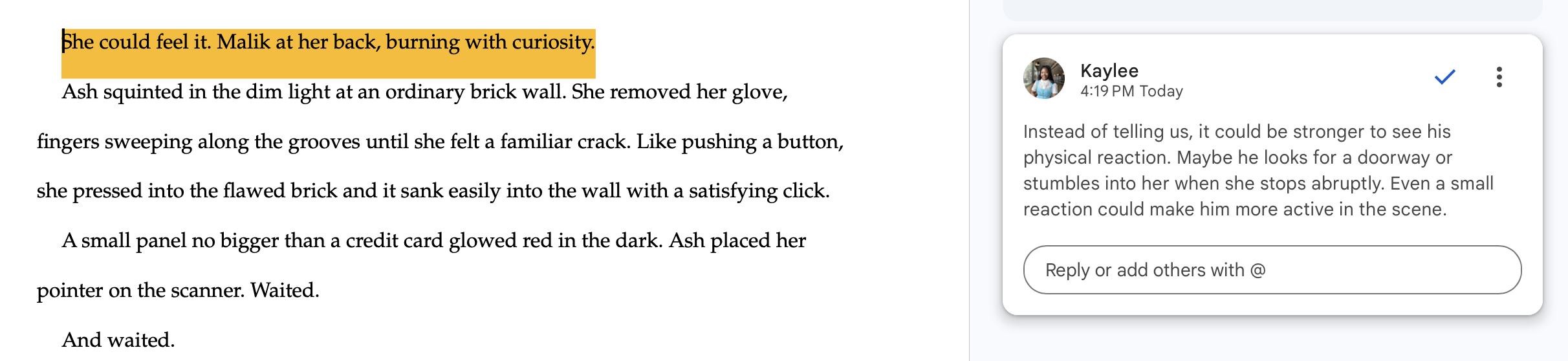
Editorial Focus: Character Agency
Rather than simply identifying a passive moment, I encourage authors to deepen characterization through action. By giving supporting characters meaningful reactions and choices, scenes become more dynamic and relationships feel more authentic.
Reader Experience
Example 1:
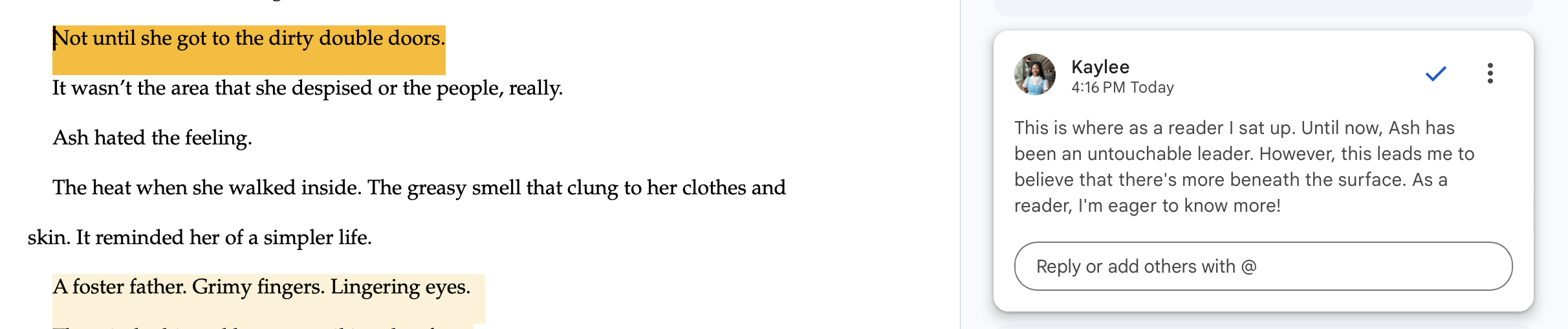
Editorial Focus: Reader Curiosity
Developmental editing is about understanding how a first-time reader experiences your story. I highlight the moments that naturally spark curiosity, emotional investment, and anticipation so you know exactly where readers become eager to turn the page.
Example 2:
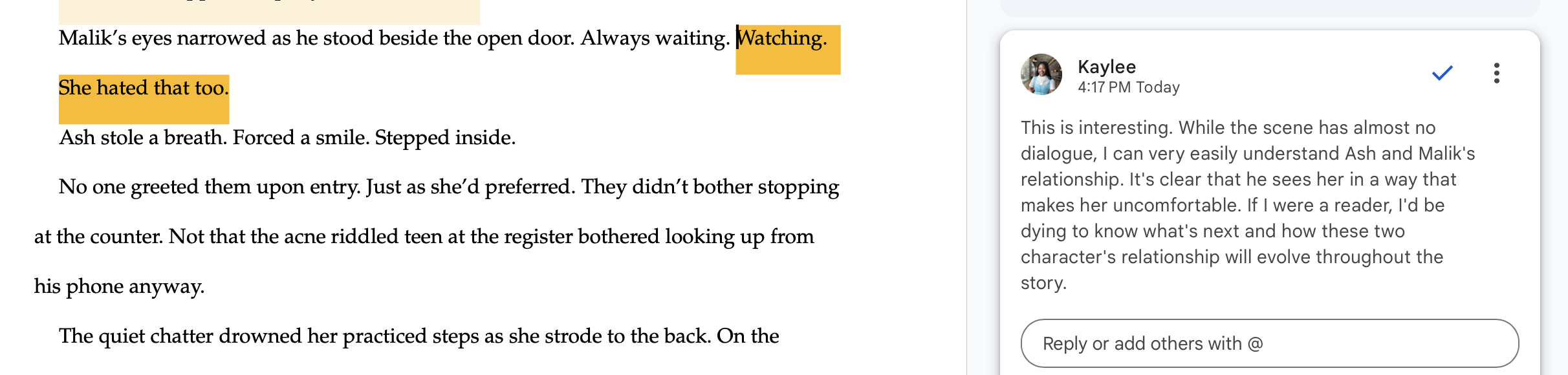
Editorial Focus: Relationship Dynamics
Strong relationships don't always require lengthy dialogue. I pay close attention to subtle interactions, body language, and emotional tension to ensure relationships feel layered, believable, and compelling from a reader's perspective.
Example 3:
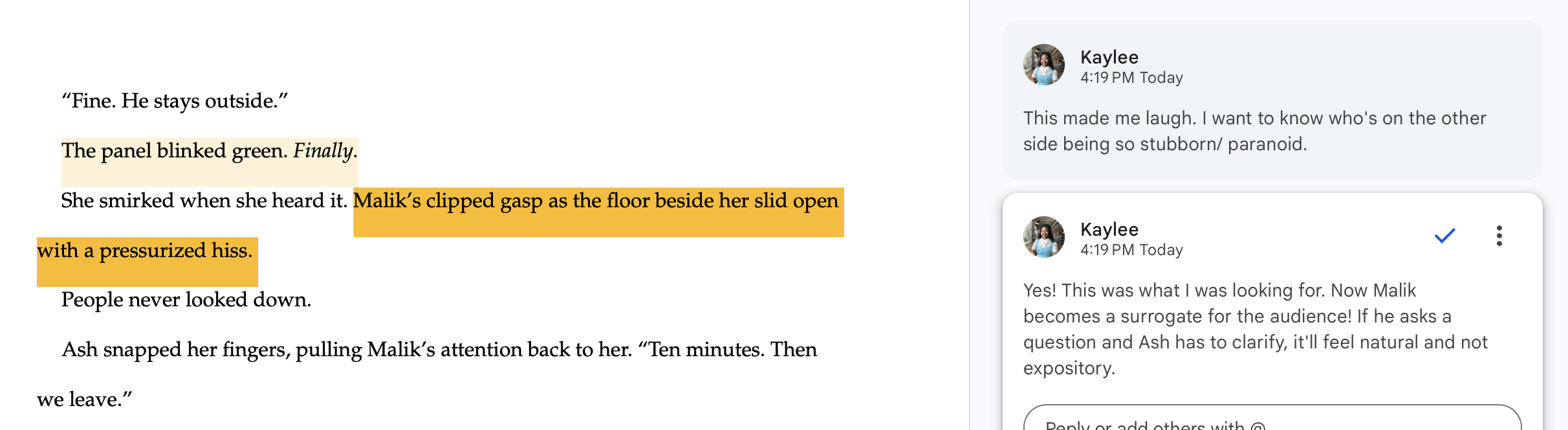
Editorial Focus: Audience Surrogate
When introducing unfamiliar worlds or concepts, I look for opportunities to let characters ask the questions readers naturally have. This allows exposition to feel organic while strengthening both character development and reader immersion.
Celebrating Strengths
Example 1:
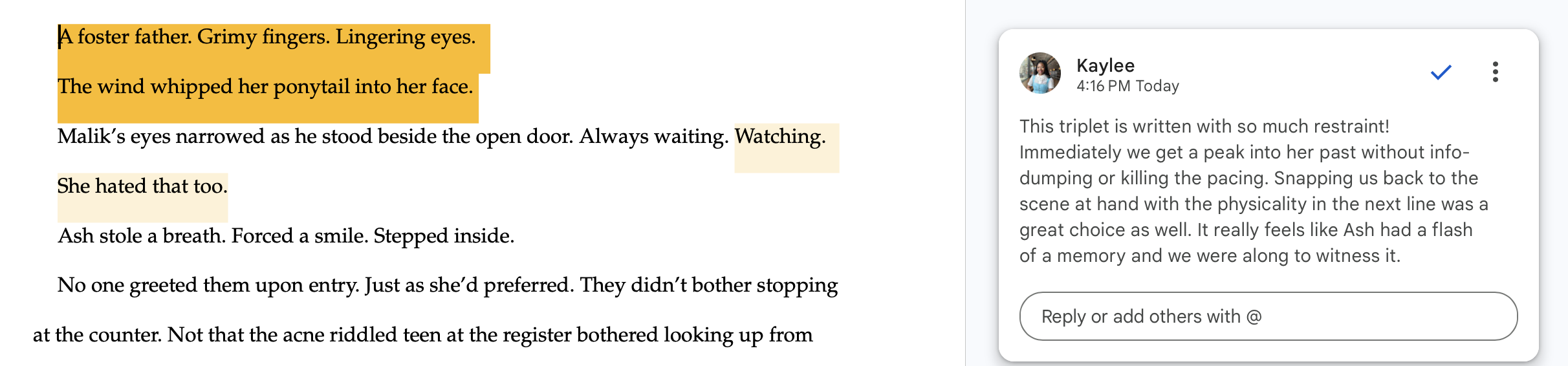
Editorial Focus: Emotional Restraint
Developmental editing isn't only about identifying opportunities for growth. I also celebrate the moments that already work exceptionally well, helping authors recognize the craft choices that create emotional resonance without overexplaining.
Example 2:
Editorial Focus: Subtle Characterization
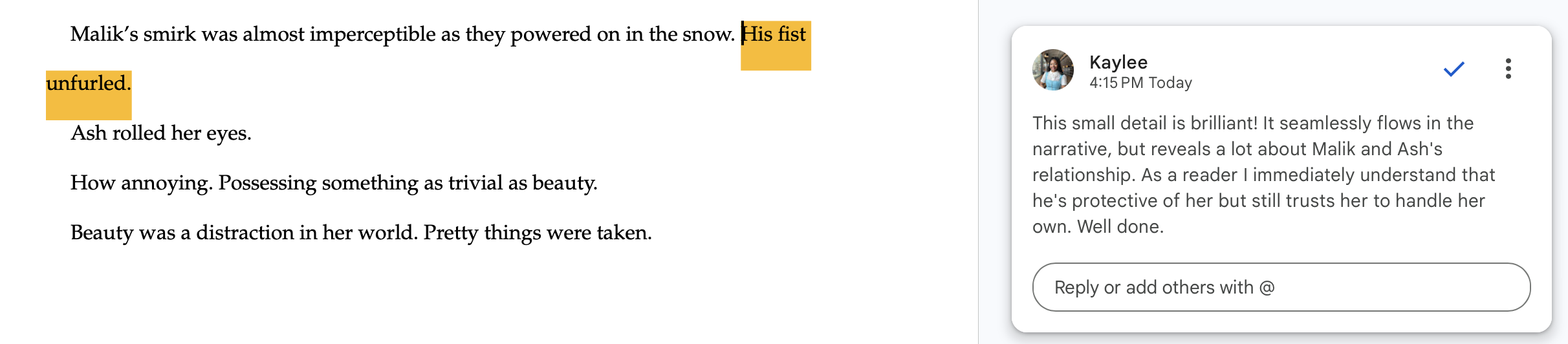
Some of the most memorable moments in a story are the smallest ones. I highlight understated details that reveal character, deepen relationships, and build trust with readers through implication rather than exposition.
Scene & Pacing
Example 1:
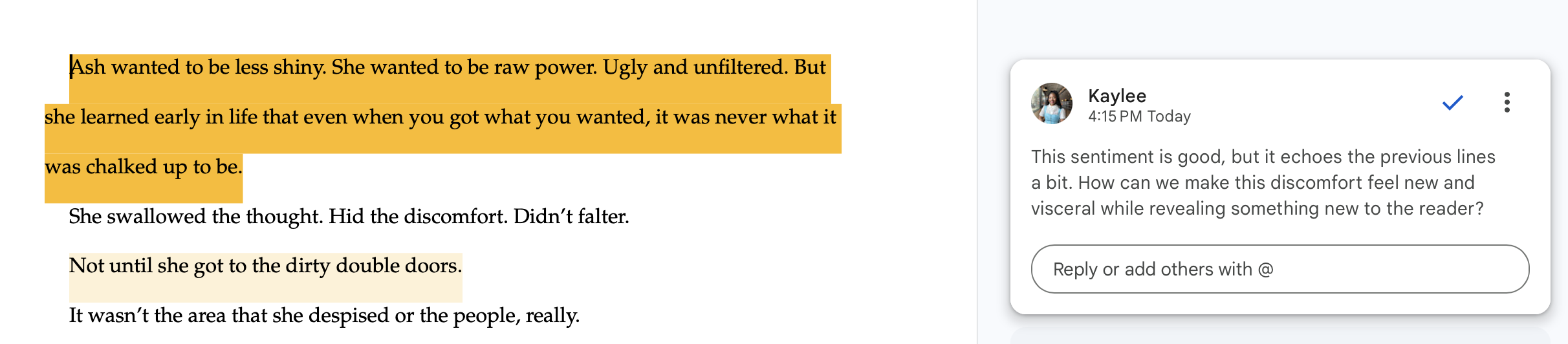
Editorial Focus: Avoiding Repetition
I look for opportunities to strengthen pacing by reducing repetitive emotional beats. Each moment should either deepen characterization, raise tension, or reveal something new so the narrative continues to move forward with purpose.
Example 2:
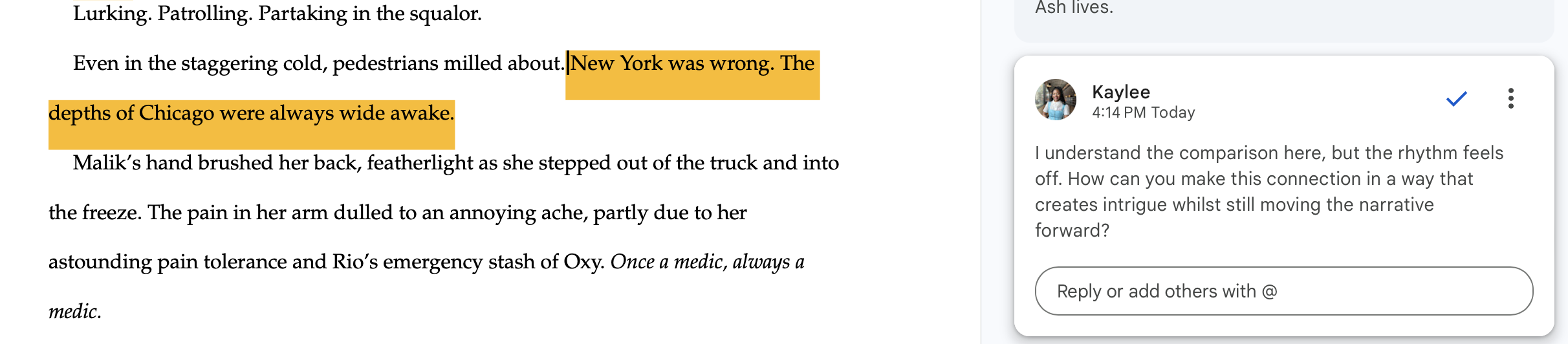
Editorial Focus: Narrative Momentum
Strong pacing isn't just about moving quickly. It's about ensuring every sentence earns its place. I identify moments where transitions, comparisons, or internal reflection can be refined to preserve momentum without sacrificing emotional depth.
Story Architecture
Example 1:
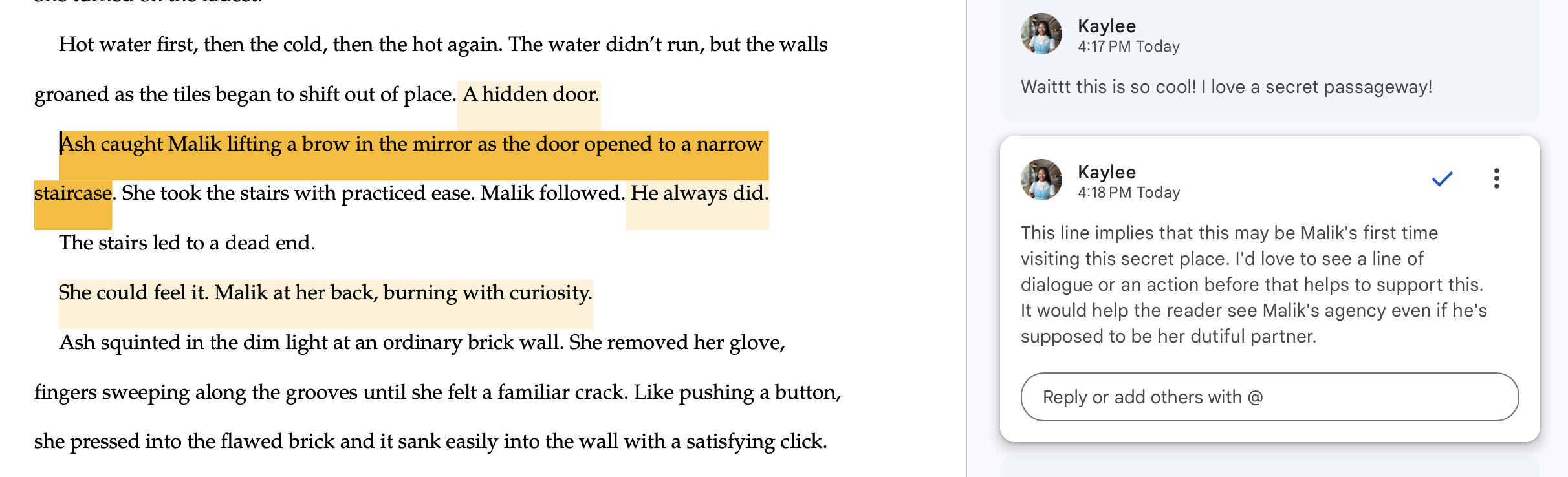
Editorial Focus: Character Function
Every character should contribute to the larger story. I evaluate how supporting characters shape the reader's understanding of the world and identify opportunities to strengthen their narrative purpose beyond simply accompanying the protagonist.
Example 2:
Editorial Focus: Supporting Character Development
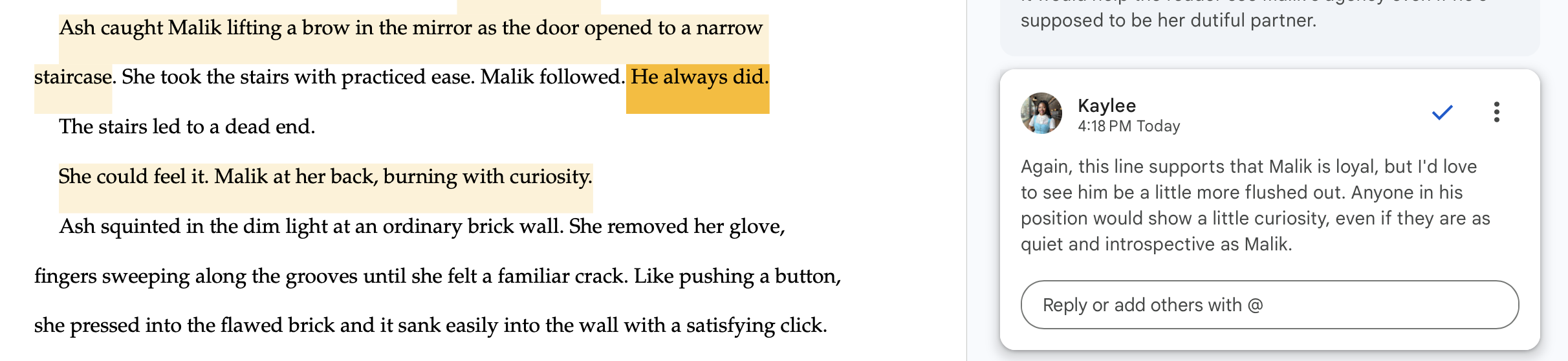
Even quiet supporting characters deserve moments of agency, curiosity, and growth. I look for opportunities to develop secondary characters so they feel like fully realized people rather than existing solely in service of the protagonist.